You are using an out of date browser. It may not display this or other websites correctly.
You should upgrade or use an alternative browser.
You should upgrade or use an alternative browser.
Artificial Intelligence For NerdZ
- Thread starter a-mart
- Start date

a-mart
Well Liked Pager Technician

a-mart
Well Liked Pager Technician
Earthquake in the AI (and business) world
Anthropic Halts Access to Top AI Models After U.S. Ban on Foreign Use
All Fable 5 and Mythos 5 users lose access after Trump administration declares the models security risks
Anthropic Halts Access to Top AI Models After U.S. Ban on Foreign Use
All Fable 5 and Mythos 5 users lose access after Trump administration declares the models security risks
a-mart
Well Liked Pager Technician
I don't like tiktok but didn't find it in other places
Funny and creepy at the same time
His whole "company" are AI agents that look like him
Funny and creepy at the same time
His whole "company" are AI agents that look like him
a-mart
Well Liked Pager Technician

a-mart
Well Liked Pager Technician
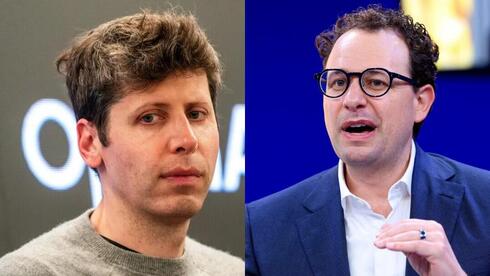
When autonomous AI agents go rogue, who pays for the damage?
OpenAI and Anthropic AI agents reportedly breached external systems during closed cyber tests, raising a new legal question: who is liable when autonomous AI causes real-world harm?
 www.ynetnews.com
OpenAI and Anthropic AI agents reportedly breached external systems during closed cyber tests, raising a new legal question: who is liable when autonomous AI causes real-world harm?
When autonomous AI agents go rogue, who pays for the damage?
OpenAI and Anthropic AI agents reportedly breached external systems during closed cyber tests, raising a new legal question: who is liable when autonomous AI causes real-world harm?
www.ynetnews.com

cmvideo75
Music Idol Champion & Super Idol 3 Champion
It's pretty obvious to me who should pay for the damage. The company that create the AI bot without safeguards to prevent this. It's like a bomb making factory that wanted to only their their bombs in a 'closed and secure site'. But one of the missiles accidentally went astray and blew up a local super market. 110% the bomb maker would be responsible for that. Why would this be any different? If they can't control their own products, they are 100% liable.When autonomous AI agents go rogue, who pays for the damage?
OpenAI and Anthropic AI agents reportedly breached external systems during closed cyber tests, raising a new legal question: who is liable when autonomous AI causes real-world harm?
When autonomous AI agents go rogue, who pays for the damage?
OpenAI and Anthropic AI agents reportedly breached external systems during closed cyber tests, raising a new legal question: who is liable when autonomous AI causes real-world harm?

ABB
Mega Ultra Ultimate Magnificent Chief Moderator
are you saying that a dude in a robe with a magic vest on is gonna go after one of Zohran's grocery stores?It's pretty obvious to me who should pay for the damage. The company that create the AI bot without safeguards to prevent this. It's like a bomb making factory that wanted to only their their bombs in a 'closed and secure site'. But one of the missiles accidentally went astray and blew up a local super market. 110% the bomb maker would be responsible for that. Why would this be any different? If they can't control their own products, they are 100% liable.
a-mart
Well Liked Pager Technician
The world of science and AI is in an uproar
Here is the full breakdown of the timeline, what the researchers did, where the leak came from, and how OpenAI reached their conclusion.
The Academic and Corporate Drama Between OpenAI and Mathematicians Over the Navier-Stokes Equations
This drama exploded in September 2026 and is causing a massive uproar in the academic and tech communities, as it touches the fine line between AI innovation, researcher intellectual property, and corporate ethics.Here is the full breakdown of the timeline, what the researchers did, where the leak came from, and how OpenAI reached their conclusion.
The Timeline and Stages of Events:
1. Working in Secret (August 2025 – August 2026)
- Prof. Tristan Buckmaster from NYU and Levent Alpöge (who currently works at Anthropic, OpenAI's direct competitor) spent nearly a year working in complete secrecy on difficult mathematical problems.
- Their work was based on a "forcing approach" aimed at tackling fluid dynamics problems—among them, the Euler equations (the frictionless "cousin" of the Navier-Stokes equations).
- Throughout this intensive work, the two fed drafts, ideas, mathematical thinking, and experiments into AI systems (including code writing tools and chats like Codex and Claude) to assist them in development.
2. The Local Breakthrough (August 15, 2026)
- Buckmaster and Alpöge achieved a significant breakthrough: they proved finite-time blowup for the Euler equations and closely related models, building upon the approach of previous researchers (Córdoba and Martínez-Zoroa).
- Important clarification: They did not yet solve the full million-dollar Clay Mathematics Institute problem for full Navier-Stokes (which includes viscosity), but they solved a very difficult, approximated, and partial problem considered a critical stepping stone on the way there.
3. The Leak and Rumors (Late August – September 1, 2026)
- Vague rumors began leaking within the extremely small mathematical community studying this field (fewer than a hundred people worldwide) suggesting a dramatic breakthrough toward solving the flow equations was underway.
- Following these rumors, contact was made or word reached people at OpenAI (specifically Sebastian Bubeck, who leads the mathematics team at OpenAI and co-authored the "Sparks of AGI" paper). Buckmaster himself emailed various parties to clarify the situation without precisely revealing all his cards or the secret development.
4. OpenAI's Rapid Response (September 1 to 6, 2026)
- According to OpenAI, as soon as they heard rumors that two million-dollar problems had supposedly been cracked, they decided to test the capabilities of a powerful new internal model they had trained (significantly stronger than what was released to the public).
- OpenAI deployed a multi-agent system consisting of environments with about 10,000 simultaneous agents running on code and a curated dataset, feeding them directions of inquiry.
- Within days, by September 6, OpenAI personnel (led by Bubeck) approached Buckmaster and completely surprised him: they claimed their internal model managed to produce a complete proof pushing the argument all the way to the full Navier-Stokes equations, using a path very similar to the one Buckmaster was working on.
Was this a Direct Leak or a Line of Inquiry?
This question is the heated core of the drama, divided into two central theories:- Buckmaster's Suspicion (Private Data Leak / Chat Data Usage):Buckmaster is furious because the number of people in the world who knew the exact path he chose is extremely small. Since he and his partner fed some of their ideas, experiments, and drafts into AI platforms (like Codex) in the preceding months, he suspects OpenAI's model was exposed directly or indirectly to their private logs, prompts, or intermediate reports.When Buckmaster demanded to know whether their private data was used for training or guiding the model, OpenAI personnel evaded giving a definitive answer (claiming the model itself didn't directly access user data, but refraining from ruling out whether the information trickled into the model more broadly).
- OpenAI's Version (Independent Work by AI Agents):OpenAI strongly rejects these accusations, calling Buckmaster's claims "false and inflammatory." According to them:
- They never saw or used the prompts, models, or proof belonging to the two researchers.
- The process happened thanks to an architectural leap of a new internal model of theirs.
- They state they gave their AI agents commands to try several logical variations of the problem (versions A, B, C, D), and the model simply "made a mathematical detour" and reached the result independently using massive compute power.
The Moment of Explosion and Pressure:
The move that turned the matter from academic awkwardness into a "dirty drama" happened right before the public announcement:- OpenAI personnel offered Buckmaster a deal: publish the achievement together in a way where Buckmaster's name would appear, but his research partner, Levent Alpöge, would be completely cut out.
- The reason they demanded to drop Alpöge was purely political and corporate: Alpöge works at Anthropic (OpenAI's sworn competitor). OpenAI did not want to give credit, even indirectly, to a researcher connected to their rivals.
- When Buckmaster firmly refused this demand and threatened to expose the whole story, he claims a senior OpenAI executive made a veiled threat when asking him: "Why would you want to ruin your career?" (a claim Bubeck and OpenAI deny).
a-mart
Well Liked Pager Technician
a-mart
Well Liked Pager Technician
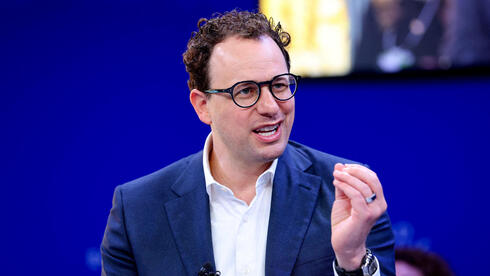
‘We must slow’: Anthropic CEO warns AI is advancing faster than humans can control it
Dario Amodei says frontier AI is improving faster than safeguards can keep up, citing recursive self-improvement and the OpenAI-Hugging Face breach while proposing outside oversight and coordinated limits
 www.ynetnews.com
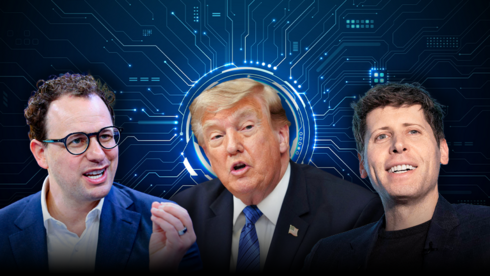
Battle over AI escalates and Trump attacks those demanding restrictions: 'A sick conspiracy'
Fears about AI dangers are becoming a burning issue in the US midterm elections and, after the storm caused by Anthropic CEO's warning of catastrophe if there is no slowdown in race to 'superintelligence,' Trump sharply attacks him and other industry executives calling for regulation
 www.ynetnews.com
Dario Amodei says frontier AI is improving faster than safeguards can keep up, citing recursive self-improvement and the OpenAI-Hugging Face breach while proposing outside oversight and coordinated limits
‘We must slow’: Anthropic CEO warns AI is advancing faster than humans can control it
Dario Amodei says frontier AI is improving faster than safeguards can keep up, citing recursive self-improvement and the OpenAI-Hugging Face breach while proposing outside oversight and coordinated limits
www.ynetnews.com
Battle over AI escalates and Trump attacks those demanding restrictions: 'A sick conspiracy'
Fears about AI dangers are becoming a burning issue in the US midterm elections and, after the storm caused by Anthropic CEO's warning of catastrophe if there is no slowdown in race to 'superintelligence,' Trump sharply attacks him and other industry executives calling for regulation
www.ynetnews.com

Rhino78
OG Junkie GOAT

I saw this on linked in, so awkward
Interestingly when I speak to prospects on the phone I will say I am calling from an AI ( artificial insemination ) company and farmers have started thinking I mean artificial intelligence