WAR

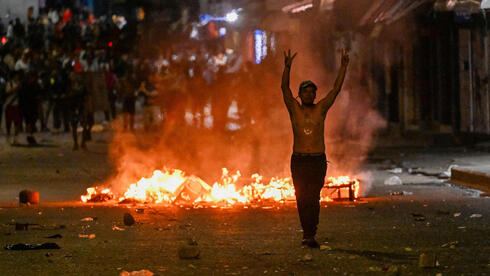
Burning tires, empty pumps: $100 oil sparks global unrest as Iran war drags on

From mass protests in Syria and fishermen blocking French fuel depots to shortages across Asia, governments face a growing choice between passing soaring energy costs to consumers or taking on more debt to shield them


I paid $5.09 a gallon yesterday.

Highest price in my lifetime... and doesn't seem like prices will lower any time soon. :(

(to be fair, 75 cents or so of that is Illinois and Crook County wetting their beak. Still, a long way from the $2.80-$3.20 about 18 months ago.)
 
The original comment said, "all these errors are always towards one specific side"

That's not correct... NYT makes dozens of errors a week of the grammatical variety, the vast majority of which have nothing to do with Israel and which they don't issue a public apology for when called out.
Again, you are wildly overshooting the point. The point of the previous statement was not that ALL errors ever made by the NYT are anti-Israel. You are smart enough to realize that. The point that is being made is that all errors about the Israel - Palestine conflict are always slanted against Israel. This is demonstrably true. Find me one time when the NYT made an error that made the Palestinian cause look bad in the last 15 years. You can't because it doesn't happen. All of the "errors" made about this specific issue slant to one side, and we aren't talking grammar here. You're not an idiot, Buckey, stop playing one.
 
Apples are not oranges.
Yeah, one is largely a grift, the other is a systematic slant of reporting across swaths of media. Media that is supposed to be 'nonpartisan'. Where the lie is printed on the front page and the correction is posted 2 months later in a footnote on page 10.

We are also not asking for reparations from these newspapers. We just want them to treat us with fucking respect.
 
Again, you are wildly overshooting the point. The point of the previous statement was not that ALL errors ever made by the NYT are anti-Israel. You are smart enough to realize that. The point that is being made is that all errors about the Israel - Palestine conflict are always slanted against Israel. This is demonstrably true. Find me one time when the NYT made an error that made the Palestinian cause look bad in the last 15 years. You can't because it doesn't happen. All of the "errors" made about this specific issue slant to one side, and we aren't talking grammar here. You're not an idiot, Buckey, stop playing one.

Yes, there is bias that is frequently slanted towards Palestine/against Israel. I never said there wasn't. Yale dude did a deep dive a few days ago and saved me the trouble:


There have also been numerous examples where NYT have shown pro-Israel bias though.


Overgeneralizing by saying things like, "it's ALWAYS anti-Israel" when it' was clearly a grammatical mistake (which received a public apology and a very quick correction) and not overt manipulation of facts for the purpose of showing bias are not helpful.
 
Yes, there is bias that is frequently slanted towards Palestine/against Israel. I never said there wasn't. Yale dude did a deep dive a few days ago and saved me the trouble:


There have also been numerous examples where NYT's has shown pro-Israel bias though.


Overgeneralizing by saying things like, "it's ALWAYS anti-Israel when it's a mistake" are not helpful.
An anti-Israel hack angry that NYtimes acknowledges that Israel exists does not indicate a pro-Israel bias. It's part of the bare fucking minimum for the NYTimes.
 
An anti-Israel hack angry that NYtimes acknowledges that Israel exists does not indicate a pro-Israel bias. It's part of the bare fucking minimum for the NYTimes.

She did win a Pulitzer, so I don't know that 'hack' is legitimate?


Here's what AI says (Disclaimer: I truly have no idea how credible she is/isn't, I haven't done a deep deep dive on this... I've just seen numerous examples of both sides throwing their hands in the air over and over saying everyone hates them and the NYT are biased for/against them):

Mona Chalabi, a British data journalist and illustrator, has publicly and extensively accused The New York Times of a systematic pro-Israel and anti-Palestinian bias in its coverage of the Israel-Gaza conflict. Ironically, Chalabi won journalism’s highest honor—a Pulitzer Prize—in 2023 for her freelance work published in The New York Times. Since late 2023, she has leveraged her data-driven platform to criticize the very institution that hosted her award-winning work. [1, 2, 3, 4]
Her critiques focus primarily on quantitative data anomalies, language imbalances, and systemic newsroom demographics:

1. Data-Driven Asymmetry in Coverage
Chalabi conducted an analysis where she scraped New York Times articles published in the initial weeks following October 7, 2023. [1]
  • Disproportionate attention: Her data visualizations demonstrated that the newspaper gave vastly more coverage to Israeli casualties than Palestinian casualties. [1]
  • The "One-to-One" Ratio: Her charts showed that while every single Israeli death roughly merited an individual article or mention, Palestinian deaths were mentioned at a rate four times lower during the early weeks of the war, despite the rapidly mounting death toll in Gaza. [1]

2. Linguistic Bias and Passive Voice


A core pillar of Chalabi's argument is that "language really matters" in establishing implicit media bias. She pointed out a stark contrast in the terminology used by editors: [1]
  • Active, emotive terms for Israelis: Israeli casualties were consistently described using active, definitive language, such as being "massacred," "slain," or "murdered." [1, 2]
  • Passive, clinical terms for Palestinians: Palestinian casualties were frequently framed with passive phrasing, often described simply as "dead" or individuals "who have died." Chalabi argues this linguistic sanitization subconsciously implies that Arab deaths are a natural byproduct of the region rather than a direct consequence of military action. [1]

3. Newsroom Representation and "Birthright" Conflicts
Chalabi has heavily criticized the cultural and demographic makeup of the New York Times newsroom, arguing that institutional bias is "baked in" due to a lack of balanced perspectives. [1]
  • In a viral interview, she wagered that there are likely more journalists in the NYT newsroom who have been on a "Birthright" trip to Israel (or have family who have) than there are Arab or Muslim journalists working at the paper. [1]
  • She points out a lack of transparency regarding conflict of interest, stating that readers have a right to know if a reporter covering Israel previously received an all-expenses-paid trip specifically designed to foster national sympathy, yet the paper does not require such disclosures. [1]

Professional Fallout and Direct Action
Chalabi's open defiance has occurred at a significant personal and professional cost. [1]
  • Pulitzer Protest: During the Pulitzer Prize events, she openly criticized the organization and her colleagues for their reluctance to even say the word "Palestine." She subsequently donated her entire $15,000 Pulitzer cash prize to the Palestinian Journalists Syndicate to fight information asymmetry. [1, 2, 3]
  • Canceled Commissions: Chalabi revealed that after launching her public critiques, major mainstream publications effectively stopped commissioning her. She stated she was pitched a single opinion piece, which was ultimately canceled after she refused an editorial directive to write strictly from the reductive perspective of an "Arab Muslim woman" rather than as an objective data journalist. [1]
  • Boycott Calls: She has since escalated her rhetoric, aligning with groups like Writers Against the War on Gaza (WAWOG) and calling on the public to boycott mainstream media outlets that she claims act as an "accomplice" to violence through biased framing. [1, 2, 3]
The New York Times has defended its coverage against these and similar internal protests, stating through spokespeople that its journalists have comprehensively documented the civilian toll in Gaza and continue to bring readers firsthand accounts from both Palestinian and Israeli perspectives. [1, 2]

Would you like to explore Mona Chalabi's specific data infographics on this topic, look into how other mainstream newsrooms compared in the study, or read about other NYT journalists who resigned over the coverage?
 
Last edited:
Yes, there is bias that is frequently slanted towards Palestine/against Israel. I never said there wasn't. Yale dude did a deep dive a few days ago and saved me the trouble:


There have also been numerous examples where NYT have shown pro-Israel bias though.


Overgeneralizing by saying things like, "it's ALWAYS anti-Israel" when it's clearly a grammatical mistake (which received a public apology and a very quick correction) and not overt bias are not helpful.
They are criticized by Arabs cause all they do is cry and complain when it comes to Israel, doesn't make it true

And if it's 90% and not 100% of the time that's good enough to "generalize"
 
She did win a Pulitzer, so I don't know that 'hack' is legitimate?


Here's what AI says (I have no idea how credible she is/isn't, I haven't done a deep deep dive on this... I've just seen numerous examples of both sides throwing their hands in the air over and over saying everyone hates them):

Mona Chalabi, a British data journalist and illustrator, has publicly and extensively accused The New York Times of a systematic pro-Israel and anti-Palestinian bias in its coverage of the Israel-Gaza conflict. Ironically, Chalabi won journalism’s highest honor—a Pulitzer Prize—in 2023 for her freelance work published in The New York Times. Since late 2023, she has leveraged her data-driven platform to criticize the very institution that hosted her award-winning work. [1, 2, 3, 4]
Her critiques focus primarily on quantitative data anomalies, language imbalances, and systemic newsroom demographics:

1. Data-Driven Asymmetry in Coverage
Chalabi conducted an analysis where she scraped New York Times articles published in the initial weeks following October 7, 2023. [1]
  • Disproportionate attention: Her data visualizations demonstrated that the newspaper gave vastly more coverage to Israeli casualties than Palestinian casualties. [1]
  • The "One-to-One" Ratio: Her charts showed that while every single Israeli death roughly merited an individual article or mention, Palestinian deaths were mentioned at a rate four times lower during the early weeks of the war, despite the rapidly mounting death toll in Gaza. [1]

2. Linguistic Bias and Passive Voice


A core pillar of Chalabi's argument is that "language really matters" in establishing implicit media bias. She pointed out a stark contrast in the terminology used by editors: [1]
  • Active, emotive terms for Israelis: Israeli casualties were consistently described using active, definitive language, such as being "massacred," "slain," or "murdered." [1, 2]
  • Passive, clinical terms for Palestinians: Palestinian casualties were frequently framed with passive phrasing, often described simply as "dead" or individuals "who have died." Chalabi argues this linguistic sanitization subconsciously implies that Arab deaths are a natural byproduct of the region rather than a direct consequence of military action. [1]

3. Newsroom Representation and "Birthright" Conflicts
Chalabi has heavily criticized the cultural and demographic makeup of the New York Times newsroom, arguing that institutional bias is "baked in" due to a lack of balanced perspectives. [1]
  • In a viral interview, she wagered that there are likely more journalists in the NYT newsroom who have been on a "Birthright" trip to Israel (or have family who have) than there are Arab or Muslim journalists working at the paper. [1]
  • She points out a lack of transparency regarding conflict of interest, stating that readers have a right to know if a reporter covering Israel previously received an all-expenses-paid trip specifically designed to foster national sympathy, yet the paper does not require such disclosures. [1]

Professional Fallout and Direct Action
Chalabi's open defiance has occurred at a significant personal and professional cost. [1]
  • Pulitzer Protest: During the Pulitzer Prize events, she openly criticized the organization and her colleagues for their reluctance to even say the word "Palestine." She subsequently donated her entire $15,000 Pulitzer cash prize to the Palestinian Journalists Syndicate to fight information asymmetry. [1, 2, 3]
  • Canceled Commissions: Chalabi revealed that after launching her public critiques, major mainstream publications effectively stopped commissioning her. She stated she was pitched a single opinion piece, which was ultimately canceled after she refused an editorial directive to write strictly from the reductive perspective of an "Arab Muslim woman" rather than as an objective data journalist. [1]
  • Boycott Calls: She has since escalated her rhetoric, aligning with groups like Writers Against the War on Gaza (WAWOG) and calling on the public to boycott mainstream media outlets that she claims act as an "accomplice" to violence through biased framing. [1, 2, 3]
The New York Times has defended its coverage against these and similar internal protests, stating through spokespeople that its journalists have comprehensively documented the civilian toll in Gaza and continue to bring readers firsthand accounts from both Palestinian and Israeli perspectives. [1, 2]

Would you like to explore Mona Chalabi's specific data infographics on this topic, look into how other mainstream newsrooms compared in the study, or read about other NYT journalists who resigned over the coverage?
eypLhjr.gif
 
One side is angry that the NYTimes constantly makes reporting errors slanted against Israel and Israelis. The other side is angry that the NYTimes isn't copying and pasting the drek that Al-Jazeera is reporting, or that they aren't allowing for opinion pieces that call for the destruction of the other side.

One is not the same as the other.
 
One side is angry that the NYTimes constantly makes reporting errors slanted against Israel and Israelis. The other side is angry that the NYTimes isn't copying and pasting the drek that Al-Jazeera is reporting, or that they aren't allowing for opinion pieces that call for the destruction of the other side.

One is not the same as the other.

When they refuse to apologize or adjust their inaccurate coverage, I 100% agree.

Also, when it's 'opinion piece' (notoriously inaccurate/biased/propagandized) after opinion piece from Gaza... and crickets from Tel Aviv? Agreed.


Here? Come on. They got called out for a GRAMMAR ERROR and immediately issued a public apology and corrected it.

The point that I'm trying to make is flying completely over your heads. Sometimes it's better to just accept the public apology and save the "they are out to get us, here is definitive proof! THE SKY IS FALLING THE SKY IS FALLING!!!" reaction for the actual 'wtf is going on here?' stuff and not the 'our bad, our editors suck... we publicly apologize and have amended it, there was no ill intent on our part and again, we're sorry' stuff.


Whatever though, I'm just a raging anti-Semite because I try to be intellectually honest
 
One side is angry that the NYTimes constantly makes reporting errors slanted against Israel and Israelis. The other side is angry that the NYTimes isn't copying and pasting the drek that Al-Jazeera is reporting, or that they aren't allowing for opinion pieces that call for the destruction of the other side.

One is not the same as the other.
Remember when 6 Arab armies attacked Israel from all directions at the same time in 1948? Now it's their "Nakba"

Then two days after October 7th they already cried "genocide" before there was even any counter action
 
Whatever though, I'm just a raging anti-Semite because I try to be intellectually honest
No one here thinks you are an anti-semite. You are one of the few from here that argues these points that we do not think to be an anti-semite, cause all you do is argue without the extra flavor of saying "we goyim" or "fight club predicted 9/11". We all know you are just an incredibly annoying fartser that would argue about whether we live on a 3 or 4 dimensional plane if given the chance.
 
@JawboneOfAnAss did you see what the dumb people posted recently on social media?

"Today I learned that the Jewish new year is on 9/11. Coincidence?"

Omg that was hilarious! Anyone posted that was thoroughly shamed for being a new level of fucking idiot

But Palestinians filming themselves on 9/11 celebrating on the streets is "zionist propaganda"
 
No one here thinks you are an anti-semite. You are one of the few from here that argues these points that we do not think to be an anti-semite, cause all you do is argue without the extra flavor of saying "we goyim" or "fight club predicted 9/11". We all know you are just an incredibly annoying fartser that would argue about whether we live on a 3 or 4 dimensional plane if given the chance.

I'll tone it down further.

Intent is never to be annoying, apologies if it comes across that way.

I'll shut up and go back to posting occasional movie/TV reviews and chiming in with pointless random tales of everyday life.

Carry on and good luck.
 
Back
Top