Book Reviews

You know who else lived in the gray? Mao Zedong, Buckey. You two have a surprising amount in common. Be careful, Buckey. Be careful.
Yes, but i have a much better haircut than he did.
 
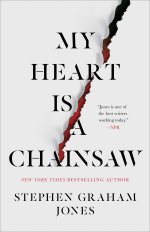
so, My Heart Is A Chainsaw, highly dug it....it was a very specific type of book....all the fvcking way till it was a diff'rant type of book, i'm sold on the author.


55711617.jpg
 
next up

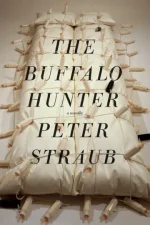
straub03large_360x540.jpg.webp
 
Yeah I might skip that, then.
It's not bad by any stretch, the world it's in is fairly interesting for a bit, it's entertaining, overall a decent series, and you don't regret reading it. But it won't leave a mark or do anything other books haven't already done. I equate it to a Jason Statham movie. You'll watch it, you'll be entertained in the moment, and you'll move on
 
Platform Decay, Martha Wells. The newest "Murderbot" novel. I didn't much like the one before this because it was a bit talky; this one is the exact opposite. Our Murderbotting hero is in the process of pulling off an extraction of some of his "family" members on a space station, and pretty much the entire book his him and his allies overcoming obstacles and opposition in an attempt to escape. Good read.

The Complete Stories of Ambrose Bierce. A large collection of stories (about 90 stories, 500 pages) by Bierce, who didn't write novels but rather focused on short stories often for various periodicals in the late 1800s. I was mainly interested because about half of his stories are in the category of "horror" so I was curious what 19th century horror stories might look like. Not much in the way of carnage and demons like modern King/Barker stories, more like haunted houses, wandering ghosts, vanishing people, etc. Some good, original ones in here, but quite a few of them were very repetitive (e.g., someone disappears/dies under shady circumstances, people go to investigate, and bad things happen). Interestingly, one of the stories has the first mention of the ancient, ruined city of Carcosa, a topic then picked up and expanded upon by future authors such as Chambers (The Yellow King), Lovecraft, Martin, etc., but probably most notably and memorably by the masterpiece first season of True Detective. The other two sections of the collection are his "War Stories" and "Tall Tales;" I'll check out a few of each before taking this one back to the library.
 
Platform Decay, Martha Wells. The newest "Murderbot" novel. I didn't much like the one before this because it was a bit talky; this one is the exact opposite. Our Murderbotting hero is in the process of pulling off an extraction of some of his "family" members on a space station, and pretty much the entire book his him and his allies overcoming obstacles and opposition in an attempt to escape. Good read.
Wait a second, so is the Apple TV series based on a book series? I had no idea, thought it was an original IP.
 
Wait a second, so is the Apple TV series based on a book series? I had no idea, thought it was an original IP.
Yes, it started 9-10 years ago and Platform Decay is the eighth in the series. Most of them are novellas so they are short, easy reads. If you like the series, give the first couple of stories a read and see if you like them (https://en.wikipedia.org/wiki/The_Murderbot_Diaries)
 
Haven't read a book in months. And I have a looooooooooooooooong list of titles I want to read. I'll try to read at least one this week to get me in the groove.

Btw, this is the ereader I use. Full Android tablet but you can switch for color to erading mode with the push of a button. Best ereader I ever had.

kv-pc-04.png
 
"Devil in the Grove," by Gilbert King.
Florida is often excluded in the conversation about southern racism, but this story brings home how prevalent hatred of blacks truly was, and how aggressively those in power politically, judicially, in the media, and especially law enforcement, fought to keep segregation alive. Thurgood Marshall, previous to becoming a member of our Supreme Court, fought alongside a plethora of brilliant legal minds in the NAACP arsenal to change the minds of racists, using the law. Marshall knew he could not get guilty verdicts against whites who created tales of abuses by blacks, so he went around the process by, while simultaneously fighting those court battles, growing the case that ultimately mattered, which was getting the cases into the court of appeals and then to the supreme court, taking the power away from corrupt local sheriffs, prosecutors, and bringing intelligent, thorough cases to the highest level of justice. It's nice to read a book about southern injustice, that doesn't focus on the gruesome details, but the slog of building small victories, with the hope our continuing generations will see a path to the truth, rather than the sides of truth.

"The Power Broker," by Robert A. Caro
This is an old book that's been on my list for years. It's not easy to find time to read an eleven or twelve hundred page tome thick with names, dates, and places from the fifties to the seventies. Like eugenics, saying the name Robert Moses gets me plenty of black stares, which prompted me to buckle down and dig deeper into the mind and crimes of the man who created wealth, influence, accessibility, and, conversely, devastation, death, abject poverty and the inability for people of color to advance their situation due to the massive power wielded in the construction and ultimate destruction of the New York highway system creation. Robert Moses tore down housing projects, city parks, community centers, any and every business and property run by people he either disliked, or who would not contribute as much to his coffers as the rich power brokers who put him into positions of power without oversight, so that he could avoid building roads in their neighborhoods, while ravishing the weak and powerless without the clout and money to save their world from being paved over. Eminent Domain on steroids. A blight on our history which is also quickly being forgotten--and we know what happens when we don't remember the past.
 
"Annie Bot," by Sierra Greer.
Wow, I did not expect my friend to send this book in her package to me, and I'm struggling to understand what she loved so much about this book. It's like a book written to be made into a cheap, tawdry Netflix series (starring one of their stable of 37 actors, rotated from show to show.)
Annie is a sexbot, created for her owner to plug in and fuck, show off to friends, and dress up like a doll--then shove into a closet when he's bored with her. He doesn't tell anyone she's a bot. She's not supposed to understand the concepts that--surprise--she somehow begins to comprehend due to an error made during a tune-up. She starts to have feelings and emotions and develops needs and you can likely guess what happens when her owner--a vapid, insecure, vindictive man who doesn't want a real partner, just a sex toy so well made that no one can tell, and who he can control absolutely--starts being questioned about his motives and choices. I can't recall the name right now, but I read a book by an Asian author with a similar story, only it was insightful, thought provoking, and believable, unlike this attempt.
 
Forgive the onslaught of reviews--I've got pneumonia and thus have had weeks to do lots of reading. This is a comforting space to learn more about books I haven't read, and also to enjoy the writing skills of several of the contributors in this thread. Thanks whoever started it.

"The Bonus Army,"Paul Dickson and Thomas B. Allen.
America used a ploy to get thousands of poor, desperate men to sign up to fight our war. The promise of a salary and bonus (post victory) that trumped any other available job motivated thousands to sign up and fight in the Great War. Only, the money was never paid. Bait and switch didn't sit well with veterans, who gathered on the front lawn of the White House in DC in every growing numbers--until our president sicced Douglas MacArthur on them, using weapons and tanks to disperse the crowd. Those who died were the lucky ones, as the only payouts made were to the wives/families of dead soldiers. Without the fearlessness of these deceived vets, the shameful treatment of men who fought and died for our country, soldiers would never have gained all the training, resources, housing, and decent pay provided in the GI Bill that ultimately passed, thanks to the sacrifices made by a group of Bonus Army vets, and I think they deserve to be remembered.
 
Forgive the onslaught of reviews--I've got pneumonia and thus have had weeks to do lots of reading. This is a comforting space to learn more about books I haven't read, and also to enjoy the writing skills of several of the contributors in this thread. Thanks whoever started it.

"The Bonus Army,"Paul Dickson and Thomas B. Allen.
America used a ploy to get thousands of poor, desperate men to sign up to fight our war. The promise of a salary and bonus (post victory) that trumped any other available job motivated thousands to sign up and fight in the Great War. Only, the money was never paid. Bait and switch didn't sit well with veterans, who gathered on the front lawn of the White House in DC in every growing numbers--until our president sicced Douglas MacArthur on them, using weapons and tanks to disperse the crowd. Those who died were the lucky ones, as the only payouts made were to the wives/families of dead soldiers. Without the fearlessness of these deceived vets, the shameful treatment of men who fought and died for our country, soldiers would never have gained all the training, resources, housing, and decent pay provided in the GI Bill that ultimately passed, thanks to the sacrifices made by a group of Bonus Army vets, and I think they deserve to be remembered.
I question the accuracy of this one a bit. As I recall, these bonuses were not promised before the war to trick soldiers into signing up, but rather were approved after the war, and set to come due 20-25 years later, with interest. The soldiers decided they didn't want to wait, and wanted their bonus now, hence the protests. If these Dickson and Allen characters are selling a different "pre-war government deceit" story, I'd look into their motives, because it does not seem they are being honest with the reader.
 
I question the accuracy of this one a bit. As I recall, these bonuses were not promised before the war to trick soldiers into signing up, but rather were approved after the war, and set to come due 20-25 years later, with interest. The soldiers decided they didn't want to wait, and wanted their bonus now, hence the protests. If these Dickson and Allen characters are selling a different "pre-war government deceit" story, I'd look into their motives, because it does not seem they are being honest with the reader.
This is what I love about this site. I will do some research, because the story I've heard from my parents jives with the book they gave me, so thank you for your input, appreciate it.
 
Back
Top